To justify the largest increase in time trial kilometers in 15 years, Tour de France director Christian Prudhomme reread the history of the race. After the presentation of the 2027 route on Thursday, he clarified that the total 71 kilometers against the clock are not a measure against Tadej Pogačar .
Prudhomme cited Bradley Wiggins , who in 2012 gave Britain its first Tour, and Federico Martín Bahamontes , winner in 1959 and considered the race's greatest ever climber.
Instead of focusing solely on the last three editions, with Pogačar turning the fight for the yellow jersey into a one-man show, the Grande Boucle's leader broadened his horizons. He explained how, without any guarantees, a real shift in the balance between time trial specialists and climbers could emerge.
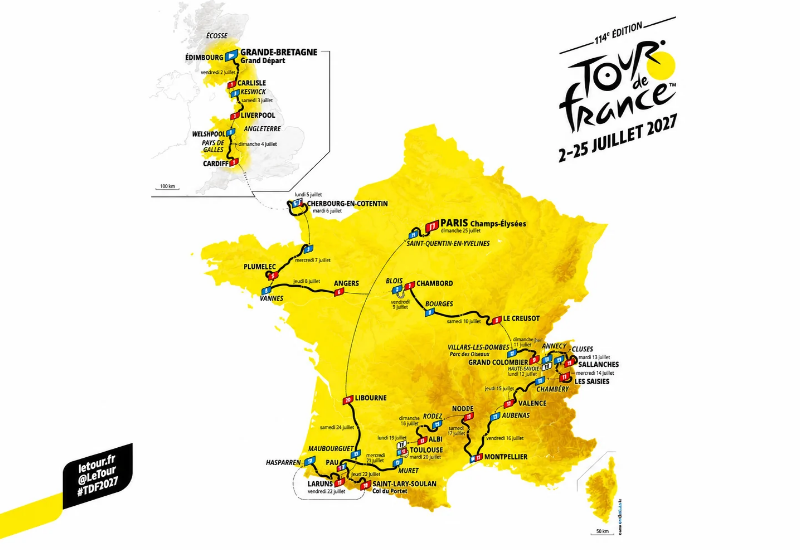
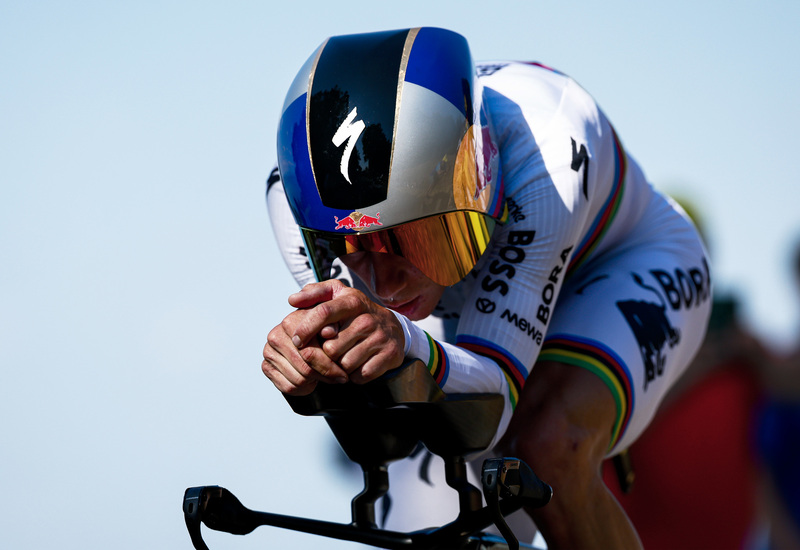
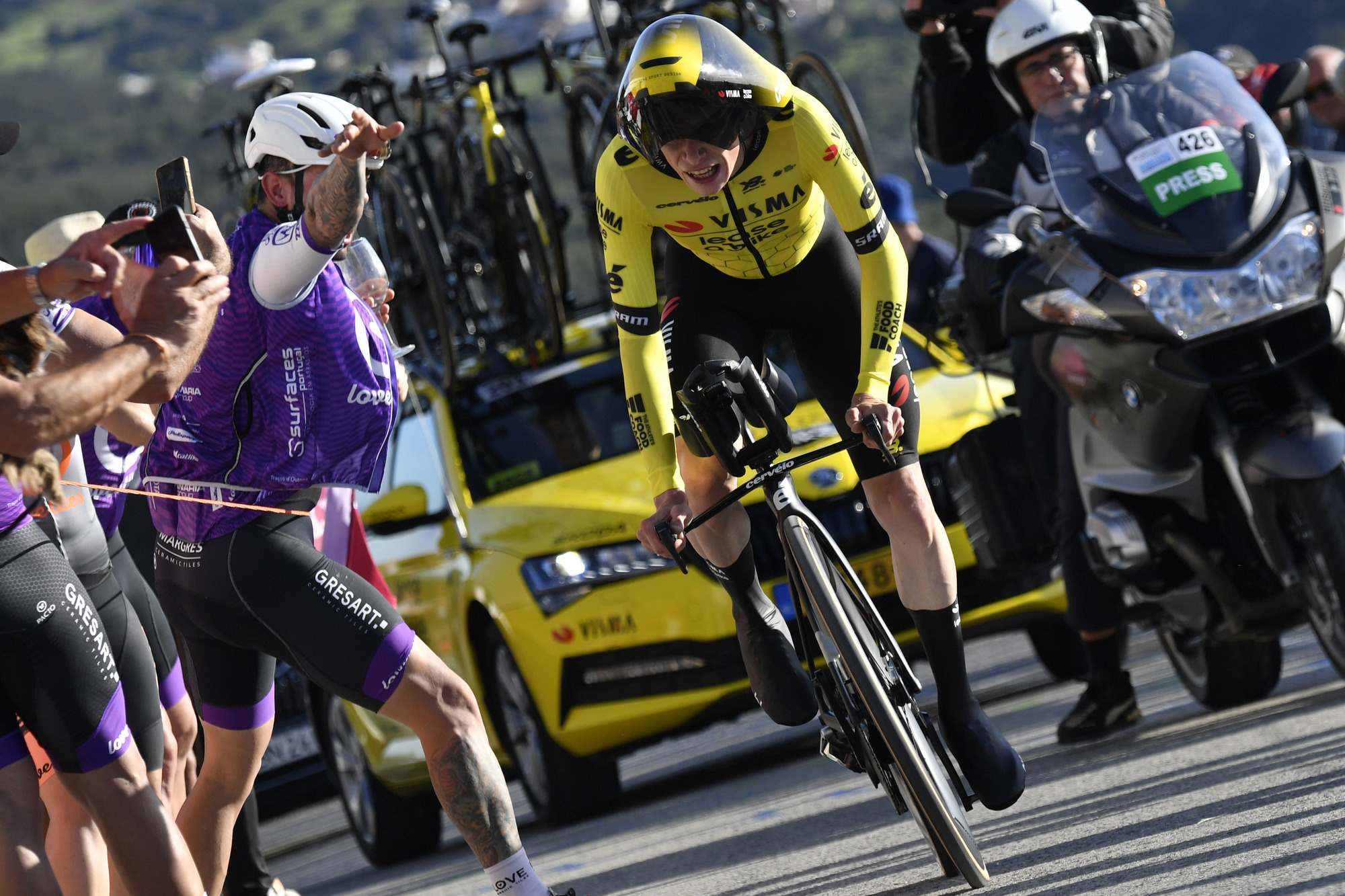
"The reason is simple, although we need to put things into perspective, given that we live in a world where no one does it anymore," said Prudhomme. The route includes a 38km time trial on stage 7 and a 33km time trial on stage 11 .
It's been 15 years since we last had so many time trials, in the Tour won by Bradley Wiggins, and this year's design was born with that idea in mind. Since then, those who won the time trial also won in the mountains, so it made no sense to extend the time trials: they would have won anyway.
"It's no longer like that; we have a different type of rider. It's like in the distant past when Federico Bahamontes would gain time in the mountains from Jacques Anquetil, a great time trial specialist. Today, Remco Evenepoel gains in time trials what he might lose on the climbs."
«He is not anti-Tadej Pogačar»
The reference to Bahamontes and Anquetil harks back to the 1959 Tour. The Eagle of Toledo won thanks in part to his dominance in the Puy de Dôme time trial, where rivals like Anquetil lost nearly four minutes. Anquetil, however, regained more than five minutes in the final time trial, in Dijon, a full 69 km long. There was a certain balance, even though by that point Bahamontes had already done enough to win.
According to Prodhomme, even citing Evenepoel as an example, the design isn't tailored to a single rider. The goal is to prevent anyone from building up too much of an early lead and maintain suspense as long as possible.
"It's about restoring balance, not for the organizers but for all the fans who want a fight to the end," he explained.
"He's not anti-Pogačar: if you put cobblestones, time trials, or climbs in front of him, he gains time, and then gains even more on his rivals on the descents," he added, recalling the Tourmalet descent on stage 6 last July. There, the Slovenian doubled his lead over Jonas Vingegaard after dropping him near the summit, and effectively won the Tour.
"If he's stronger, he's stronger," Prudhomme continued. "But there's a desire to rebalance things, not for any particular rider, just as a few years ago we tried to design more challenging courses to increase the chances of a spectacular race."
Then the closing, playing on an old proverb: "The organizers propose and the runners dispose. It has always been like this."
«Many very tough climbs, unknown or semi-unknown»
Beyond the time trials, Prudhomme urges people not to take the 2027 mountains for granted. "I hope people are surprised, first on paper and then in reality. There are many really tough climbs, unknown or semi-unknown, and others that have been around for a long time but don't have the fearsome reputation they deserve."
Among the classics is the Tourmalet, but the director is thinking above all of the return of the Col de Burdincurutcheta , one of the toughest climbs in the French Basque Country: 8.7 km with an average gradient of 9.3%, at the start of stage 19.
Then comes the "truly challenging" Col du Pré : 12.6 km at 7.8% gradient in the Alps, which comes before the final climb of the Saisies. There will also be a stage in the Massif Central, with over 3,800 meters of elevation gain in beautiful but harsh landscapes.
“Let’s not forget that in the first week we’ll be in Wales, with some very tough climbs right from the start of stage 3. I know the locals are proud of what they’ll see that day.”
There's also a small tribute to the 2027 UCI World Championships, the so-called "Super World Championships," scheduled for late August on the roads of the Northern Alps and on the track at the velodrome in Saint-Quentin-en-Yvelines. Stage 10 will include the Côte de Domancy circuit and arrive in Sallanches, site of the 1980 and 2027 Road World Championships . Stage 21 will start from Saint-Quentin-en-Yvelines and pass by the velodrome before reaching the Champs-Élysées.
"We would never have held the World Championships before the World Championships, which is why there will only be two climbs of Domancy and not twenty," Prudhomme explained. "But Bernard Hinault, a Tour legend, won the World Championships there in 1980, so it's also a tribute to him."
"The climbs aren't particularly steep, but they have unique gradients: short and very steep. There will be a lot to see that day too."
And maybe even in time trials.