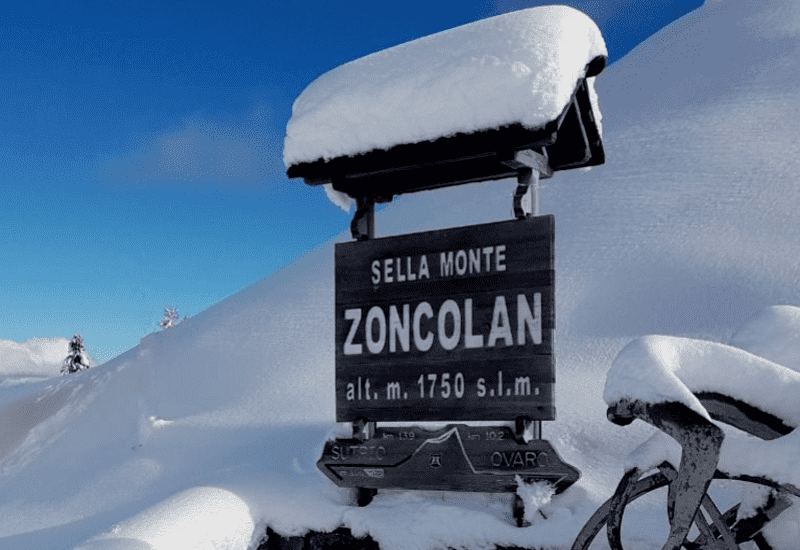
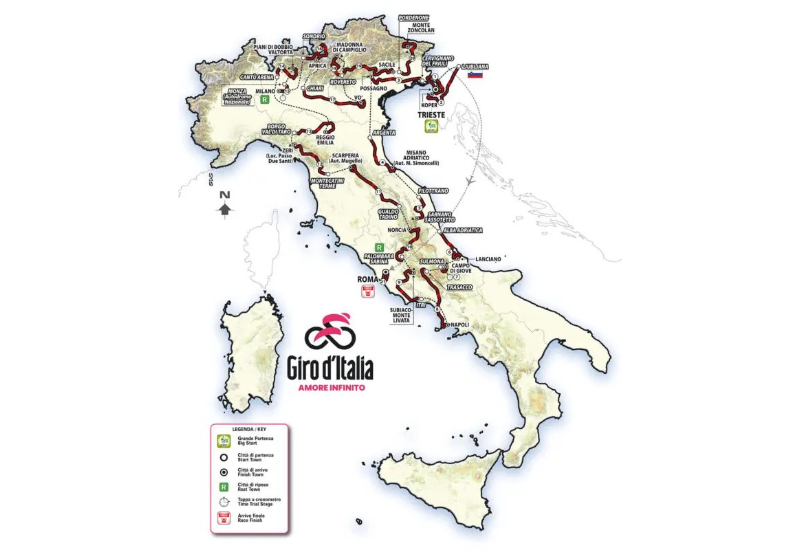
A modern icon of the Giro d'Italia is about to return: after a six-year absence, Monte Zoncolan will be a protagonist in the 2027 Giro d'Italia . The brute of the Carnic Alps, one of the most feared climbs in Italy, will make its eighth appearance in the men's Giro and will be the grand finale of the race for the pink jersey, on stage 20 .
The climb will be from the traditional side of Ovaro , in Friuli-Venezia Giulia, about 120 km northwest of Trieste, where the 110th Giro d'Italia will start. The number to note is this: 10.1 km with an average gradient of 11.9% , one of the most ferocious climbs in double-digit cycling.
But the average is deceiving. The real nightmare lies beneath the paper profile: the hardest sections exceed 20% and can make even the world's best climbers look ordinary, focused only on surviving as the climbs climb to the 1,750-meter summit.
How to climb: the story kilometer by kilometer
After an initial, already unpalatable 1.65 km stretch at 9.1% gradient, the peloton finds itself tempted by a brief false flat between Liariis Piazza and the start of the Strada Zoncolan. But everyone knows the worst is yet to come, and this respite only serves to introduce the toughest section.
The next 4 km are tackled at a thrilling average gradient of 15.3% , with sections exceeding 22%. Here, the group breaks up at a blistering pace: those who can't keep up must fight to maintain cadence and position. Even immediately after the village of Liariis, no one can say they're safe, as the following 3 km remain at an average gradient of 13.9%. The final 2 km, with legs now empty and screaming, have gradients of 7.1% and 8.9%.
The finale passes through tunnels in the final kilometer, after narrow, exposed, and often snow-covered roads in May above the Gorto Valley. The approach is almost completely flat for 120 km, followed by two warm-up climbs: the Passo Duron and the Sella Valcalda . On either side, huge crowds will push the top GC riders and help those in the smaller peloton survive. The climb vies for the title of the toughest climb in professional cycling with the Alto de l'Angliru and the Passo del Mortirolo, which in the 2027 Giro d'Italia the riders will have already climbed twice in the same day, on stage 16.
Why it is a key stage
Whoever wears the pink jersey before the Zoncolan will be hoping to build an unattainable lead, but the RCS organizers have left the door open for a dramatic turn of events: a bad day could lead to a complete collapse. At the end of the 10.1km stage 20, it will be clear who will wear the pink jersey in Rome the following day.
For those who play fantasy cycling, the message is clear: stage 20 could turn everything around. With the race already marked by extremely tough days in the mountains, pure climbers are needed, in condition until the final day, because on climbs over 20%, endurance matters more than tactics. However, the lesson of history also holds true: even breakaway riders have won on the Zoncolan, like Michael Rogers in 2014 and Lorenzo Fortunato in 2021. Also be wary of riders not yet ranked, who could have more freedom in the final week.
The story: a modern icon written through dramatic events
Without the long history of other Giro legends like the Stelvio or the Blockhaus, the Zoncolan has built its reputation as a modern icon. The men's roll of honor includes Gilberto Simoni (twice, in 2003 and 2007), Ivan Basso (2010), Igor Anton (2011), Michael Rogers (2014), Chris Froome (2018), and, most recently, Lorenzo Fortunato (2021).
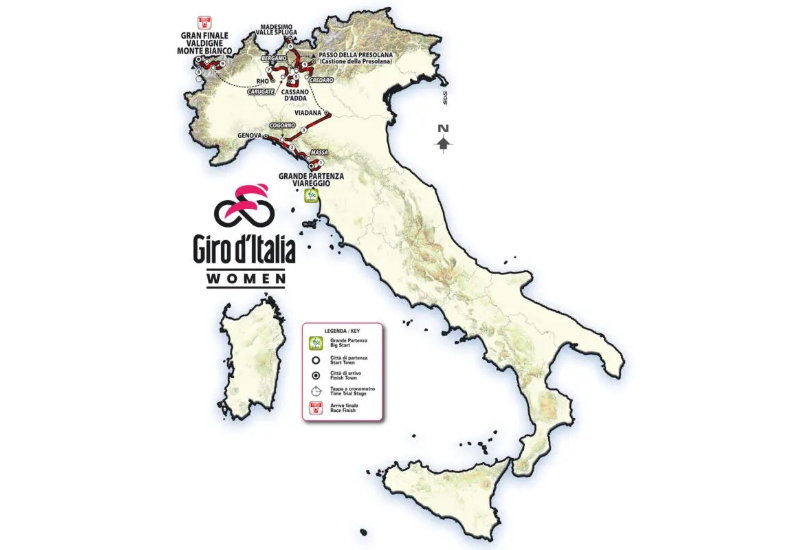
The first time at the Giro was actually the women's, in the tenth stage of 1997, won by Fabiana Luperini. The legend of the Women's Giro d'Italia, holder of the most titles, admitted to being "very scared of a climb like the Zoncolan," but winning up there was a source of great pride for her and launched her towards the third of her five overall victories.
Six years later, it was the men's turn, and Gilberto Simoni triumphed, en route to his second pink jersey in 2003. On both occasions, the climb was from the gentlest and most regular side, that of Sutrio. The Giro continued that way in 2021, when Fortunato scored a surprising victory in a breakaway, amidst the fog and cold, while Egan Bernal extended his lead in the standings. That day, Bernal beat Simoni's record on the Sutrio side by over a minute, but for 2027, the Ovaro side counts, where the Italian still holds the lead.
Four years after his debut, in 2007, the organizers introduced the steeper and now more traditional climb, but it was Simoni who stood out once again. At 35, fourth in the overall standings, he, along with his teammate Leonardo Piepoli and Andy Schleck, still had the strength to outdistance pink jersey holder Danilo Di Luca on the toughest climbs. Simoni and Piepoli, teammates at Saunier Duval, crossed the finish line together and still hold the record from Ovaro: 39:03 .
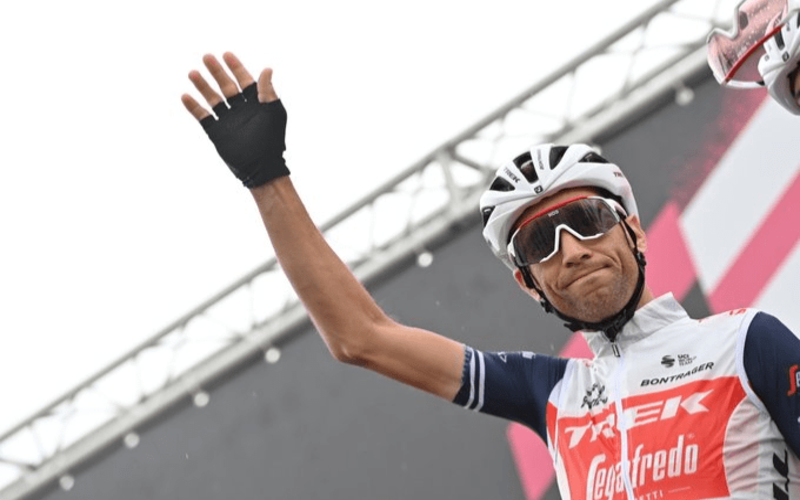
The 2027 profile recalls that of 2010, when Ivan Basso broke away from everyone and edged out world champion Cadel Evans by more than a minute. Starting 7:43 off the pace, Basso closed the gap by 3:50 on David Arroyo, a crucial gain in his overall standings. Four days later, he completed the chase for the pink jersey on the Mortirolo, leaving Arroyo behind along with teammates Vincenzo Nibali and Michele Scarponi on the road to Aprica.
In 2011, the stage was marred by controversy and shortened: on the eve of the race, to the disappointment of fans, it was announced that the extremely tough Monte Crostis climb would be removed. The Tualis climb was added, but the route was later rerouted to avoid the town where volunteers were protesting the judges' decision. Anton won solo, attacking on the steepest climbs, but the most important battle was being fought about thirty seconds further back, between Alberto Contador and local favorite Vincenzo Nibali. Contador, booed by fans who accused him of playing a role in the elimination of the Crostis climb, stayed close to Nibali and dropped him in the final 500 meters: a move Nibali called "disrespectful." Neither man went on to win that Giro: Contador was disqualified for doping in February 2012, and the title went to Michele Scarponi.
When the Zoncolan returned in 2014, the breakaway, not the top riders, took the stage, and this time, too, there was controversy. On paper, Michael Rogers had pulled away from the remnants of the initial group of 20 breakaway riders, but in reality, he was engaged in a fierce duel with Francesco Manuel Bongiorno until 3 km from the finish. While Rogers repeatedly took his hands off the handlebars to push his way through thousands of cheering fans, it was the Italian who paid the price for the enthusiasm of a supporter: a fan wearing the rainbow jersey tried to push him, and the Bardiani rider took his foot off the pedal and had to stop, while Rogers sprinted to victory. By then, Nairo Quintana already had the overall standings in his grasp and defended the jersey on the slopes of the Zoncolan, becoming the first Colombian to win the Giro d'Italia and the first South American to win a Grand Tour since Luis Herrera at the 1987 Vuelta.
The last climb from Ovaro was during the 2018 Giro. Chris Froome attacked 4.3 km from the summit and held off the final push of pink jersey Simon Yates in the final meters. After a slow start to the Giro, Froome started from 12th place and climbed to fifth place, a sort of consolation prize for the four-time Tour de France winner. But the best was yet to come: four stages later, on the Colle delle Finestre, Yates collapsed, and Froome's attack from 80 km out gave him the pink jersey at the last gasp with his second stage victory.
That same year, Annemiek van Vleuten became the first and, to date, only woman to win a professional race on Mount Zoncolan from the Ovaro side. Ahead of Ashleigh Moolman-Pasio, the Dutchwoman took the summit with a solitary and dominant victory, the first step toward the first of her four Giro d'Italia as a woman.
Who will join the roll of honor in 2027, and what drama will the brutal climbs of the Zoncolan unfold? We'll have to wait for stage 20, in May. If history is any guide, the modern icon of the Giro d'Italia is ready to write its next chapter.