Cycling
Julian Alaphilippe, a magician capable of exceeding the sum of his watts
The Frenchman's retirement marks the end of an era: an analysis of a career that redefined emotion in cycling.
R
Written by
Editorial Team
6 min read

The Frenchman's retirement marks the end of an era: an analysis of a career that redefined emotion in cycling.

Four weeks ago, Julian Alaphilippe collapsed on the asphalt right at this writer's feet, atop Alpe d'Huez. The Frenchman wasn't at the top of the list of people to interview at the finish line of the penultimate stage of the Tour de France , but it soon became clear that he couldn't be ignored.
With his arms outstretched behind him, while the media crowded around the new French hopeful Paul Seixas in front of him, Alaphilippe sat staring into space. It was almost a symbolic moment, a sort of passing of the torch, which took on even more meaning in light of his sudden retirement from cycling.
When he finally spoke to reporters, still sitting on the asphalt, Julian seemed to have already made up his mind: "I'm not thinking about tomorrow. I'm not thinking about anything. All I really want is to hug my son," he said softly.
He suggested, repeatedly and with varying degrees of ambiguity, that this would be his last Tour de France. And he made a comment that already revealed what would later unfold.
"No, no. There's no fun left," he said of his experience on this Tour. "That's okay, it's over. It's time to stop when there's no fun left."
Thus, Julian Alaphilippe has finished. Time waits for no one, and one of the most spectacular riders of recent years has bid farewell.
In the 24 hours between the first rumors of Alaphilippe's retirement and the official announcement, social media was flooded with tributes, not only from fans but also from race organizers, broadcasters, and fellow riders. The news wasn't even confirmed, yet no one could resist pouring respect and admiration for a rider who captured the imagination like few others.
If there was such an overwhelming response to Alaphilippe's farewell , it is probably because of the way he made people feel.
Alaphilippe was pure electricity . Like lightning in a charged sky, he connected with brilliant, powerful flashes. It's hard to think of another rider capable of connecting with fans on such a visceral level. He didn't just keep you on the edge of your seat: he reached out through the screen and pulled you into the race.
There are many voices in Alaphilippe's highlights reel , from the way he lit up the 2019 Tour de France with those 14 days in the yellow jersey, to the less happy moments such as the Liège-Bastogne-Liège he threw away in 2020.
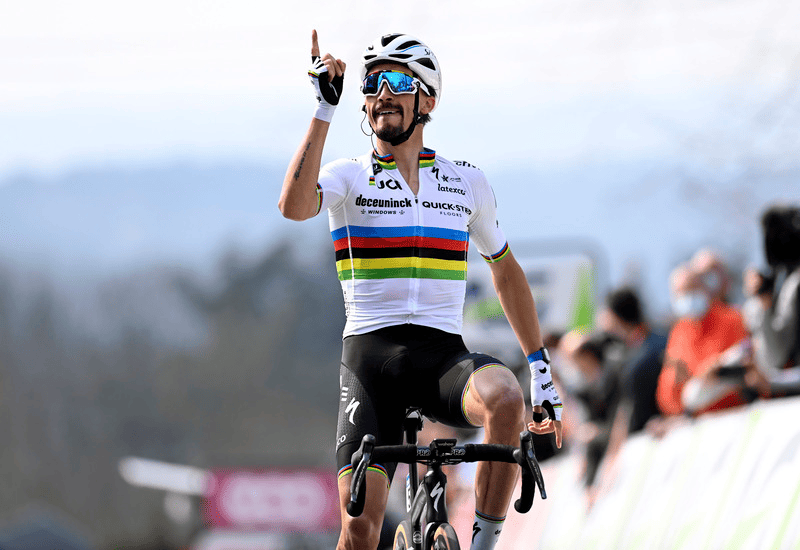
But his second world title in Leuven in 2021 was a true masterpiece: the very embodiment of Julian Alaphilippe.
He had arrived to defend that title without much fitness or hope—he later revealed that, deep down, he would have been happy to free himself from the burden of the rainbow jersey. But somewhere along the way, he produced one of the greatest performances ever seen at a World Championship.
He threw caution to the wind, attacked again and again, and held off his pursuers in a breathtaking final lap, all while making faces for the cameras and warming up the crowd.
It was heavy metal cycling from a master showman. But it was also the work of a true magician, capable of producing—through instinct, inspiration, and pure heart—something greater than the sum of its watts. It was a kind of magic.
In the post-race press conference in Leuven, Alaphilippe made a comment that has always stuck: "I've been the same rider since 2014, and I don't want to change anything," he said. "I've taken so much pleasure in racing like this, and it's really important to me to maintain this pleasure, because cycling is a tough sport, and I don't want to become a robot."
Alaphilippe turned professional in 2014 , at the height of the Team Sky era, when the British team rode with such control and precision that its riders were nicknamed 'Skybots'. He retires at a time when, even if the show is in safe hands with riders like Pogačar and Van der Poel , the life of a professional cyclist is now immersed in data and increasingly defined by artificial intelligence.
In between, Alaphilippe carved out a space where emotional energy was the driving force , where he could fail spectacularly but win even more, and where you never knew what would happen next.
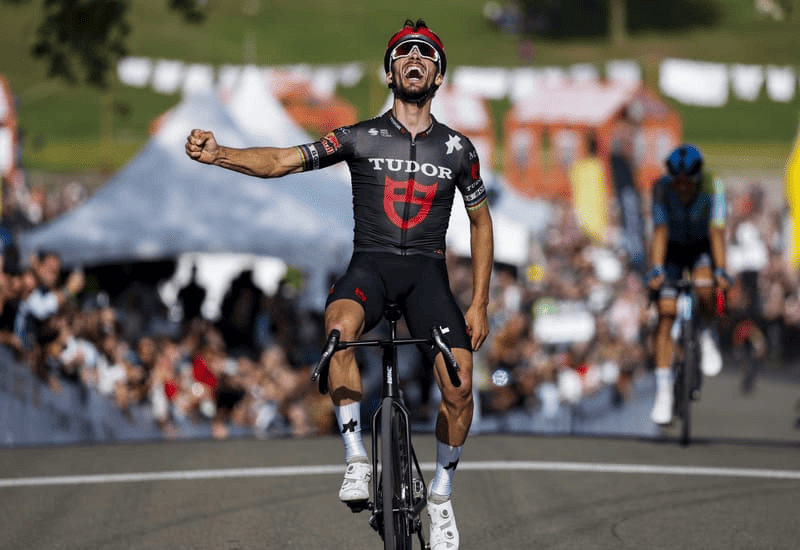
Eventually, cycling caught up with Alaphilippe and surpassed him. Not that he didn't fight against the decline. His stage win at the 2024 Giro d'Italia —clinched with a 120-kilometer breakaway—was one of his boldest feats, and the 2025 Grand Prix de Québec was clinched with an opportunistic flourish. It would be his last victory.
In 2026, there were no glimpses of the old Alaphilippe, and the Tour de France proved to be little more than a struggle . At Alpe d'Huez, he crossed the finish line arm in arm with Warren Barguil, another Frenchman in his waning years who had made headlines a few days earlier with his comments about cycling's new generation. "Before, if you did 6 watts per kilo, you were strong," Barguil had said. "Now you're a domestique."
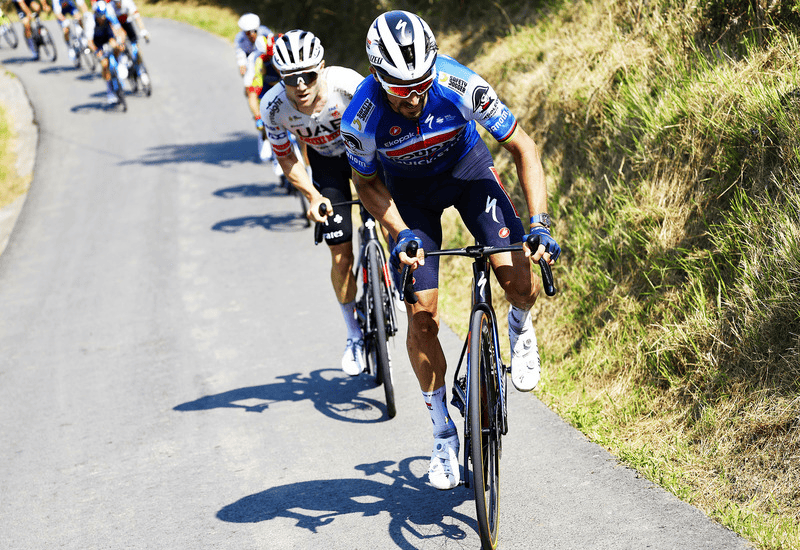
Alaphilippe agreed. "Yes, yes. You can feel it. And I think you can see it, too. The speeds are crazy," he said.
Alaphilippe still had a year left on his contract , but, as always, his heart was telling him something different than the numbers. Perhaps he could have squeezed out another season, but it would have been purely through inertia, and that, ultimately, made no sense to him.
And so Alaphilippe acted on instinct and improvised his retreat – faithful to his style until the end.
He leaves behind a legacy of 45 professional victories, six Tour de France stages, and two world titles. But above all, he will be remembered for the way he made us feel.
His departure also definitively closes a chapter in Fantacycling: Alaphilippe was an unpredictable rider, but very reliable in terms of fantasy points, during his golden age. Now there are other great champions who are shaping an era and racking up many more victories, but the emotions Alaphilippe gave will be difficult to replicate.
Photo: Sprint Cycling Agency
Sports journalist and cycling enthusiast, following professional cycling for over 10 years. Collaborates with FantaCycling to bring you the best analysis and news from the world of cycling.
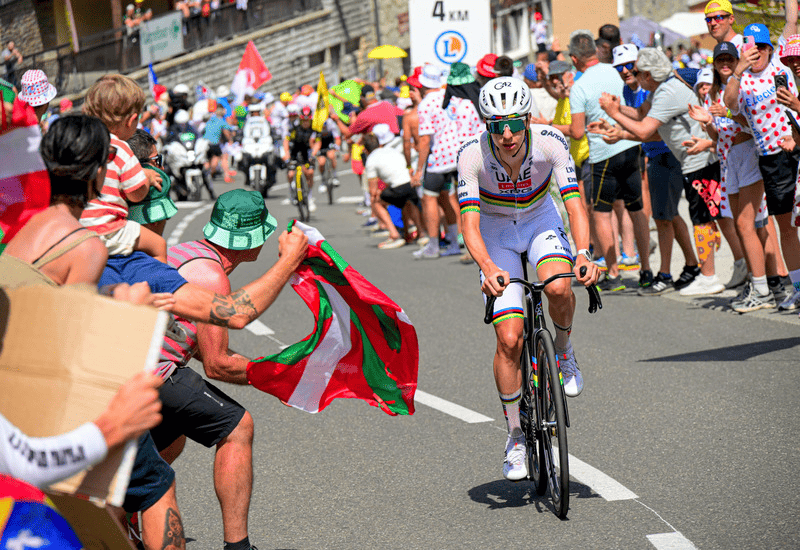
A 9.4km stretch of twisties will open the 2026 Vuelta in Monaco: the Slovenian champion warns everyone that it will require mental strength rather than raw power.
The Frenchman's retirement marks the end of an era: an analysis of a career that redefined emotion in cycling.
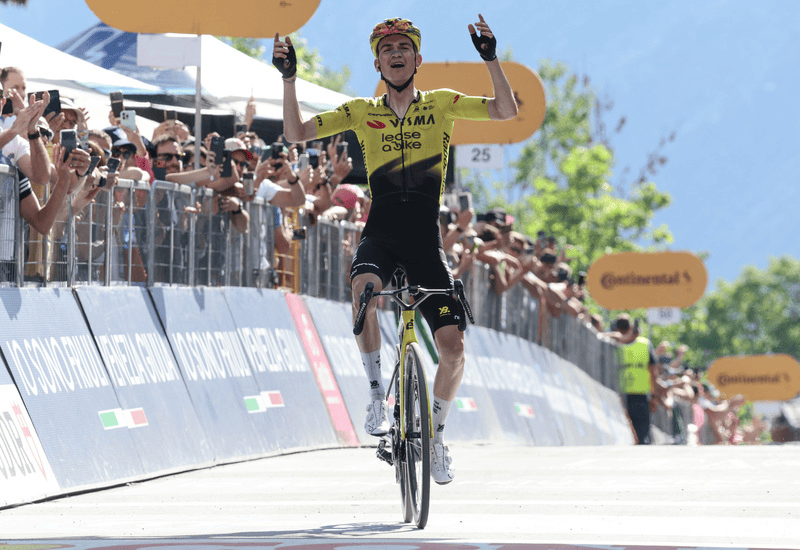
The American rider from Visma-Lease a Bike postpones any decision on the general classification until after the first week, focusing on motivation and stage opportunities
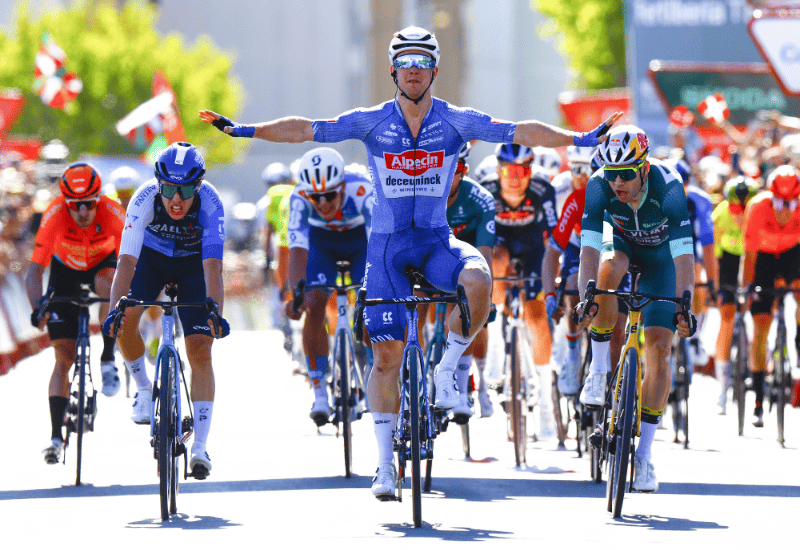
The Australian sprinter from Alpecin-Premier Tech is a candidate for the points classification of the Vuelta a España 2026, but warns: the intermediate sprints placed at the end of the stage could be useful to the Slovenian