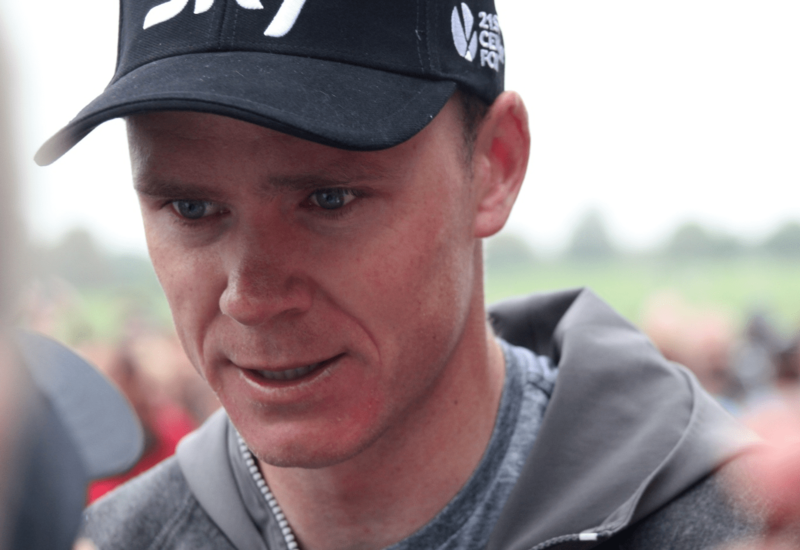
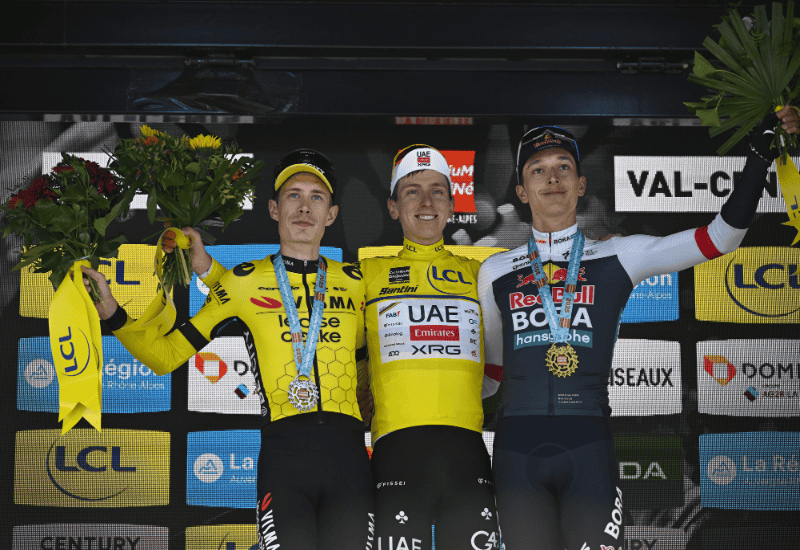
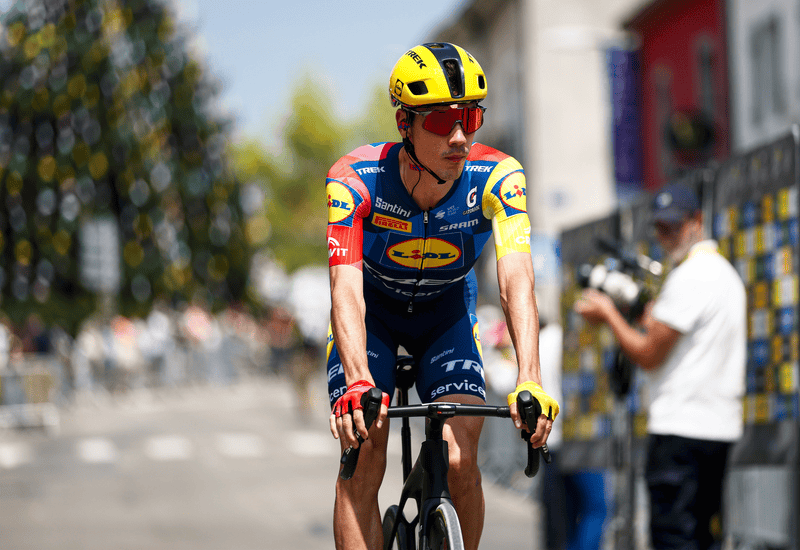
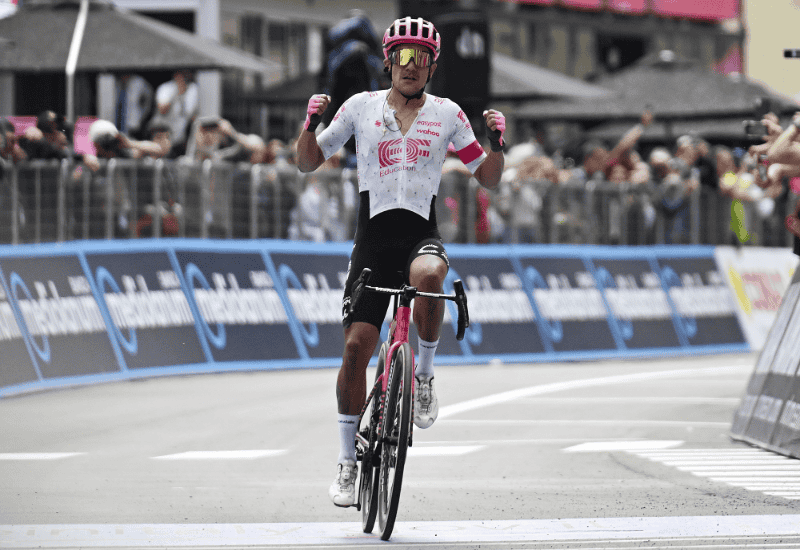
It's been just a year since Chris Froome retired, yet it feels like an eternity since the former British champion dominated stage racing. Eight Grand Tour victories between 2011 and 2018, three Dauphinés and two Romandies: for a full decade, Froome was simply the best stage racer on the planet. But since his move to Israel-Premier Tech in 2021, silence has fallen on the four-time Tour winner, partly due to the serious accident in 2025 that prematurely ended his career.
"Your ultimate goal is to make your opponents think they're just racing for second place," Froome says of Tadej Pogačar, his natural heir in the modern cycling imagination. It's a comparison the former rider accepts with caution: Pogačar 's ability to dominate both the Grand Stage Races and the Classics is unique.
"What he's doing is nothing short of phenomenal, just admiration and respect," says Froome. "He's not rewriting history, he's writing his own history in the sport. When the level is already so high and the margins between everyone else are so thin, he manages to be head and shoulders above everyone else."
Froome focused in particular on Pogačar's attack on the Tourmalet on stage 6 of this year's Tour de France, when the Slovenian inflicted nearly three minutes on Vingegaard. "I had enormous respect for that move; it's exactly what I would have tried to do. First mountain stage, you lay down the law, sweep them away, and mentally you've already won the race."
With a bitter smile, Froome admits with disarming honesty where he would rank today: "There's no doubt about it, I'd probably be just inside the top 20 in this race, even though it's only been six or seven years since I won." The reasons? Improved tires, bikes, and aerodynamics, but above all, nutrition: "When I won the Tour de France, we probably consumed no more than 40-50 grams of carbohydrates per hour; now we're consuming over 100-150 grams in the big stages. We're not talking about a 20-30% increase, but a 300% increase." A figure that perfectly explains why modern paces on climbs have become unsustainable by the standards of the past.
The conversation then turns to accidents, a sensitive topic after Pogačar's crash on stage 8 of the Vuelta a España, which cost him the rest of his season. Froome, who has suffered two very serious crashes in his career—the 2019 Dauphiné and the 2025 one that definitively ended his career—offers a unique perspective: "I think it's very personal. Luckily for him, it wasn't his mistake; it was one of those unfortunate crashes, so I don't think there's any reason for him to be scared after that. Some guys, on the other hand, just seeing someone else crash, will be scared for months."
Froome reveals a curious detail about his recovery: "I was incredibly lucky that after my crash in 2019, when I broke my leg in two places, I didn't have that fear. But I don't even remember the crash; it was simply erased from my memory." A psychological factor that likely contributed to his attempt, albeit unsuccessful, to return to the top.
That crash in June 2019 effectively marked the end of Froome's winning career. He returned to racing the following year but failed to secure a top 10 finish in 2020, his final season with what was then called Ineos Grenadiers. A move to Israel-Premier Tech didn't bring any better results, except for a third-place finish at Alpe d'Huez in the 2022 Tour de France behind an immense Tom Pidcock—a finish Froome considers a victory.
"I felt so lucky to be able to return to the sport I loved. I got into cycling quite late and had set myself the goal of racing until I was 40, and I don't think anyone understood why, at 36, after a serious accident, I wanted to come back," he says in a more hesitant voice, the emotion palpable. "I honestly felt that if I hadn't kept going, giving it my all to see if I could win a fifth Tour de France, I would probably have spent the rest of my life wondering."
"Now I can retire satisfied that I did everything I could. It's no longer a question in my mind. What if? What if? What if? I know. I did it. I realized I wasn't capable of returning to that level. That the level had changed." An admission that symbolically closes a chapter, while leaving intact the respect for a champion who was able to get back up and face his sporting end with dignity.