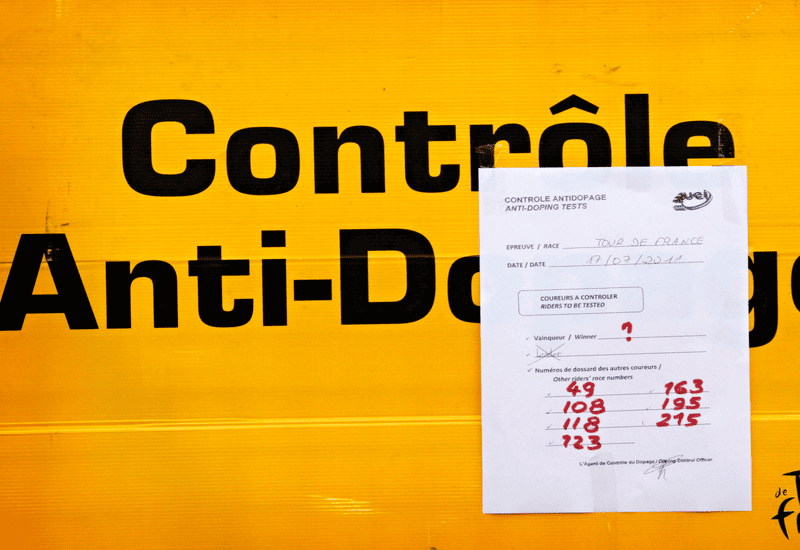
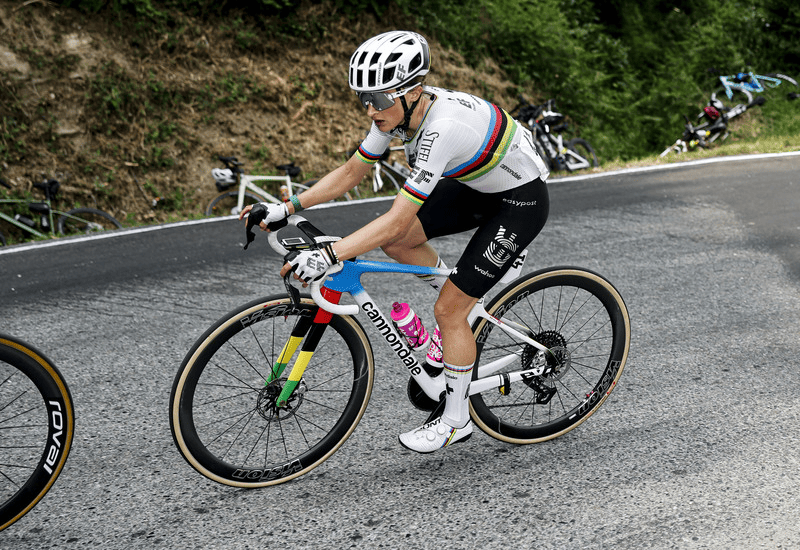
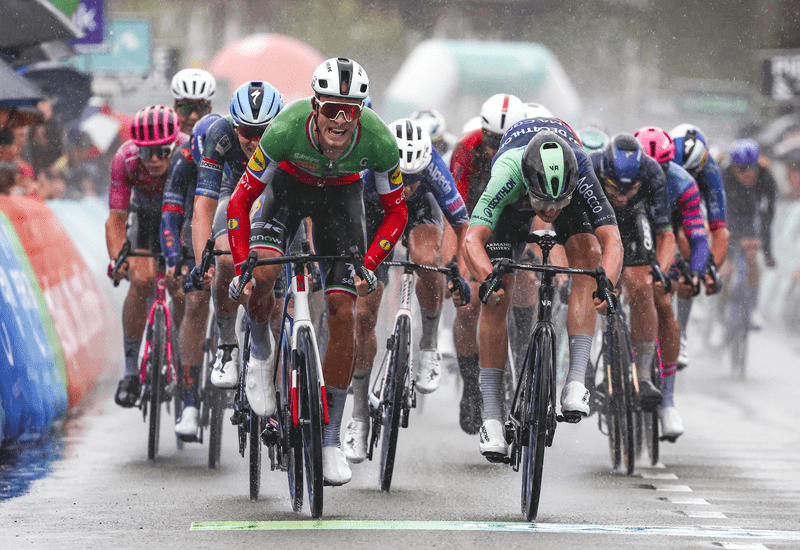
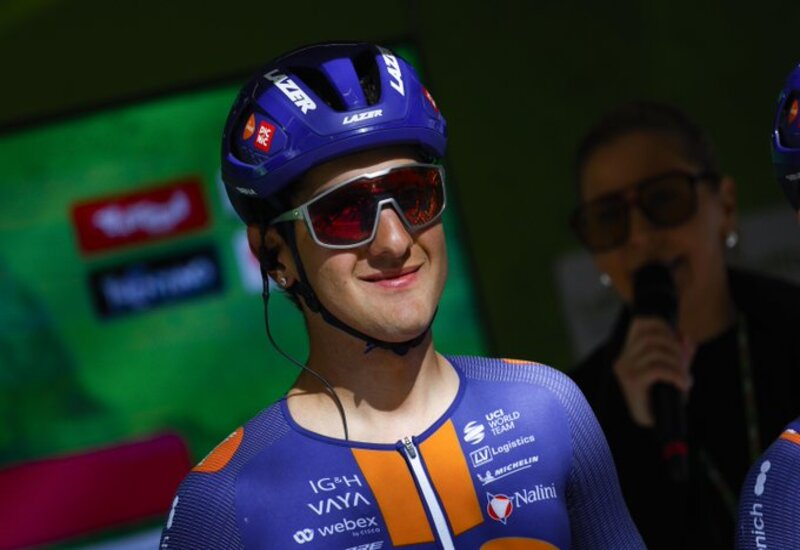
"Is artificial intelligence the new doping?" This is the provocative question posed by Mikel Zabala, former performance director at Movistar, during this year's Science & Cycling conference, the most important scientific event in the cycling world, held every year in the week preceding the Grande Départ of the Tour de France .
Zabala's presentation highlighted a disturbing topic: the parallels between the Armstrong era and the era of artificial intelligence. This is a warning that deserves attention, especially for those who closely follow peloton dynamics and fantasy cycling strategies.
New drugs, old nightmares
March 2025 could be a watershed date in the anti-doping world: the USAN Council has officially approved Rentosertib, the first AI-designed drug for the treatment of idiopathic pulmonary fibrosis, developed by biotech Insilico Medicine through its Pharma.AI platform.
The implications for cycling are clear: if AI can rapidly design new drugs, it could theoretically also create performance-enhancing drugs that are not yet detectable by anti-doping laboratories. An anonymous industry source confirmed to us: "We haven't seen this scenario materialize yet, but we've already observed existing drugs, like steroids, modified by AI for more specific performance benefits. This is worrying, and potentially dangerous."
Cycling has already seen cases of athletes caught with experimental substances such as GW1516, also known as cardarine. Russian Valery Kaykov, a star of the team pursuit at the 2012 European Track Championships, was the first athlete to test positive for the substance in 2013. More recently, Italian Matteo Spreafico was banned for three years after testing positive for cardarine at the 2020 Giro d'Italia, while Linda Laporta is currently under investigation for a similar case at this year's UAE Tour Women.
The digital twin: a double-edged sword
Professor Yannis Pitsiladis, director of the Centre for Exercise and Medicine at Hong Kong Baptist University and a member of WADA's medical research committee, introduces the concept of a "digital twin": a virtual model of the runner that combines genetic, physiological, and performance data to simulate responses to different training scenarios.
For fantasy cycling enthusiasts, this is a fascinating concept: imagine being able to accurately predict how a rider will respond to an increase in training load, or how they'll perform at 2,000 meters above sea level. Ineos Grenadiers (now Netcompany-Ineos) is already collaborating with Swansea University to develop digital twins capable of identifying hidden talent among young professionals, a potentially revolutionary tool for those scouting for talent to add to their team.
The flipside? The same technology could theoretically personalize doping, identifying the optimal combination of substances to maximize benefits while minimizing detectability.
The scientific counter-offensive
All is not lost, however. Dr. Michael Skinnider of the Lewis-Sigler Institute in Princeton is developing an AI platform capable of predicting the chemical structures of future doping drugs, as well as improving the analysis of mass spectrometry data to identify suspicious anomalies among thousands of chemical signals.
"We've created a database of 1,600 drugs potentially relevant for doping," explains Skinnider. "Our system has already predicted two substances subsequently added to the WADA list, as well as identified several suspect molecules." A potential ally for the biological passport, capable of providing a clearer picture of athletes.
From Cycling 1.0 to 3.0: The (un)finished evolution
Zabala describes three distinct eras: "Cycling 1.0" of the 1990s and 2000s, dominated by unscrupulous doctors during the Armstrong era and Operation Puertas; "Cycling 2.0" since 2012, characterized by multidisciplinary collaboration and increased rider awareness; and now "Cycling 3.0," where AI could amplify potential through predictive models.
"Runners must maintain their autonomy," warns Zabala. "In the era of doping, coercion and the fear of exclusion were real. With unregulated AI, we have similar fears. Excessive biometric monitoring and opaque decisions could leave athletes vulnerable. Without ethical governance, AI could undo the progress of AI 2.0."