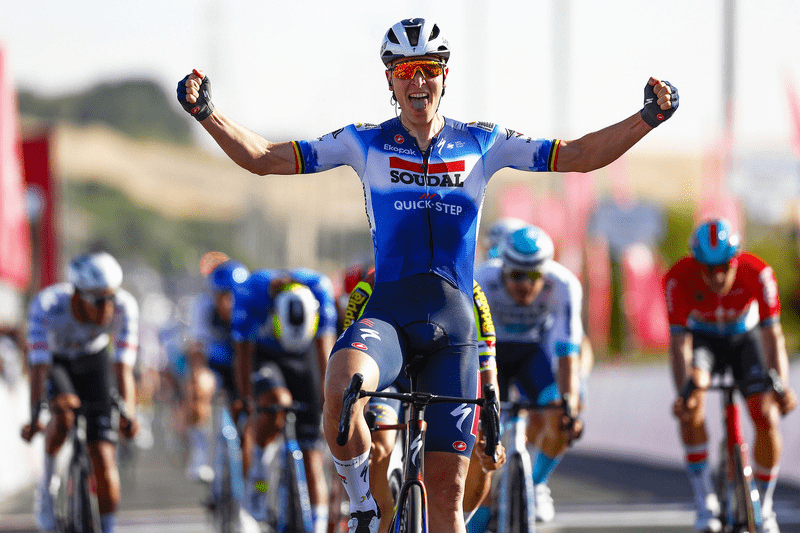
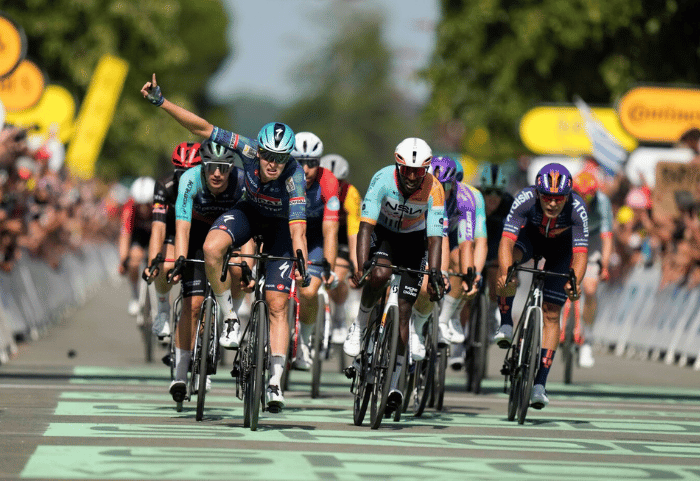
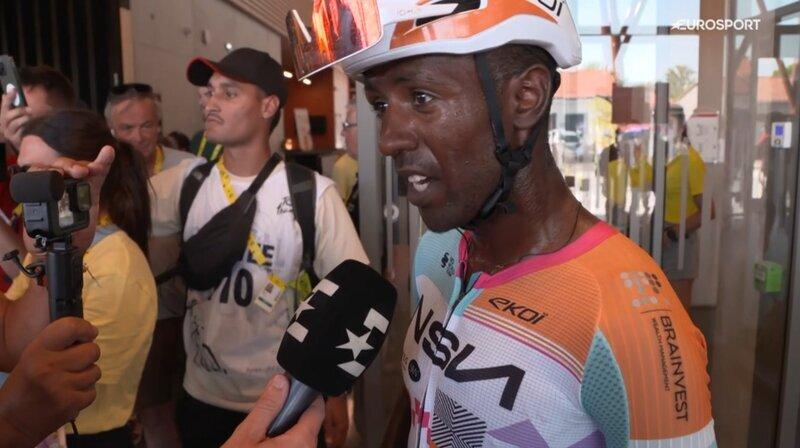
After crossing the finish line in Bergerac with one of his devastating long-distance sprints, Tim Merlier had no doubts: shortening the ninth stage of the Tour de France was the right choice. The Belgian sprinter, winner of Saturday's stage and a true protagonist of this 2026 Grande Boucle, welcomed the organizers' decision to shorten the stage to Ussel, in the Corrèze department, by 30 kilometers. The stage has been placed on red alert due to the historic heatwave plaguing central France.
"Definitely, it's not a bad idea in my opinion. Maybe the GC riders or those aiming for breakaways will see it differently, because they might see an opportunity, but we've now had a week of racing with temperatures consistently above 35 degrees Celsius," said Merlier, visibly exhausted after his incredible sprint. "It was a real battle to get water, ice, and drinks from the team cars. During the three fast stages, I was focused on the race, but on the other days, I was just thinking about having enough to drink and enough ice to cool down, because the heat is simply unbearable."
The Soudal-Quick-Step rider then concluded with a sentence that said it all: "For me, it's a good idea to shorten the stage. There wasn't much else they could have done, I think. So, thanks to the organization for trying to do something."
This isn't the first time this edition of the Tour has had to contend with extreme weather conditions: already on the third stage, the risk of fires had led to the closure of the final route to spectators. But with the escalating heat, something more drastic was needed. The decision, made on Saturday evening in consultation with local authorities, also involved race director Christian Prudhomme , who explained the reasoning to the French press.
"The Corrèze stage is a tough one. The champions have been racing for ten days, in very high temperatures, and the department has been placed on red alert," Prudhomme told L'Équipe. "We decided, together with the prefect, in full agreement with the authorities, to shorten it. We'll cut it straight away and we'll have a shorter stage. From a sporting standpoint, nothing changes, because it remains extraordinarily demanding. However, it will be 30 kilometers shorter. When Thierry Gouvenou told Pogačar, he thanked him."
Yes, you read that right: even Tadej Pogačar , the yellow jersey, appreciated the change. It's a clear sign of how harsh the conditions were, even for the Slovenian champion, who is used to struggling on climbs.
Prudhomme also ruled out the possibility of moving up the start times: "Waking the riders at 5 a.m. is a bit complicated, even if it happens for doping controls," the Tour director quipped. The organizers, however, reiterated that the shortening of the route was primarily intended to protect spectators along the road: "It's a matter of common sense. From a sporting standpoint, it doesn't change anything. On the contrary, it could be even more intense."
Photo: Sprint Cycling Agency