Interviews
Pidcock: "Del Toro was clearly working for McNulty."
The Briton analyses the mad race in Montreal: frustrated attacks, Americans wall against wall and Seixas' legs drained by the frantic pace
R
Written by
Editorial Team
3 min read

The Briton analyses the mad race in Montreal: frustrated attacks, Americans wall against wall and Seixas' legs drained by the frantic pace

Tom Pidcock was Britain's best chance of ending a long drought at the Road World Championships, a title they haven't won since Mark Cavendish way back in 2011. But the 2026 edition, held on the streets of Montreal, turned into yet another defeat for the favorites, with the resounding solo victory of American Brandon McNulty, who sprinted away with 32 km to go and held off an elite group until the end, but never managed to truly cause any harm.
Pidcock was also in the chasing pack, along with future podium contenders Michael Matthews (Australia), Mathieu van der Poel (Netherlands), and the pre-race favorite Isaac Del Toro (Mexico). The Briton tried several times to light the fuse and close the gap on McNulty, but each of his attempts was consistently thwarted by the American's teammates, Matteo Jorgenson and Quinn Simmons.
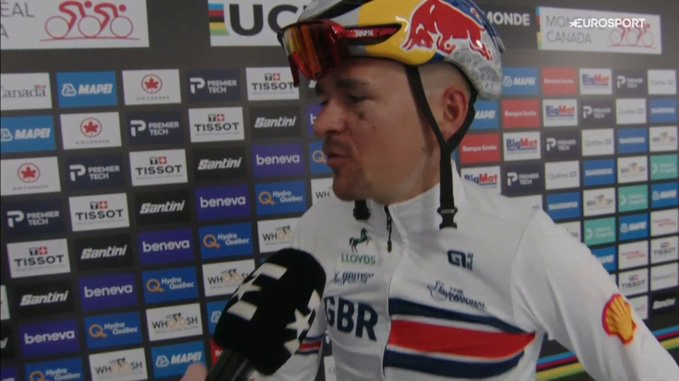
Seventh at the finish line with a bitter taste in his mouth, Pidcock also had to come back after an early crash, but when asked what it would have taken to catch McNulty, he admitted that he was very close to being mocked. "Yeah, obviously, Del Toro was working for McNulty, his teammate at UAE Team Emirates-XRG, who was right there in front in the end," Pidcock said.
"Likewise, obviously Matteo Jorgenson too – the Americans are a very strong team, so yes, they didn't let anyone go."
At the start of the final lap, the final climb of the Camillien Houde realistically represented the last real chance to catch McNulty, who had a lead of just under a minute. Pidcock and Giulio Ciccone (Italy) managed to close the gap to within 12 seconds of the American with a decisive acceleration, but by the time the group closed in on them, the race was already over.
"I think if Ciccone and I had a slightly larger margin and managed to hold on, we would have caught McNulty. But that's just the way racing goes sometimes."
McNulty was considered an outsider at the start of the race, while the spotlight was on Del Toro and Paul Seixas (France), fresh from their first and second place finishes at the Montreal Grand Prix. The French team, with a much stronger team, pushed the pace on every lap of the opening circuit to make the race selective and favor Seixas' attack, but the 20-year-old ultimately suffered cramp on the final lap, dropping to 15th place.
"I think that was their plan. But yeah, it also cooked Paul's legs," Pidcock added. "That happens when you run for six and a half hours."
"We started the race really strong, and I think everyone was pretty exhausted by the end. There was also a lot of wind, which made the race a bit negative towards the end. Overall, we were all a little tired, a little burned out, so we could have attacked, but we couldn't really make a difference."
Sports journalist and cycling enthusiast, following professional cycling for over 10 years. Collaborates with FantaCycling to bring you the best analysis and news from the world of cycling.
Race boss Marc Reef analyses the route: two long time trials, three mountain finishes and a Pyrenean stage that could decide the Grande Boucle.
Britain's Grand Départ opens a Grande Boucle with the most time trial mileage since 2012 and a grueling Pyrenean finish, as Pogačar aims for a record sixth seal
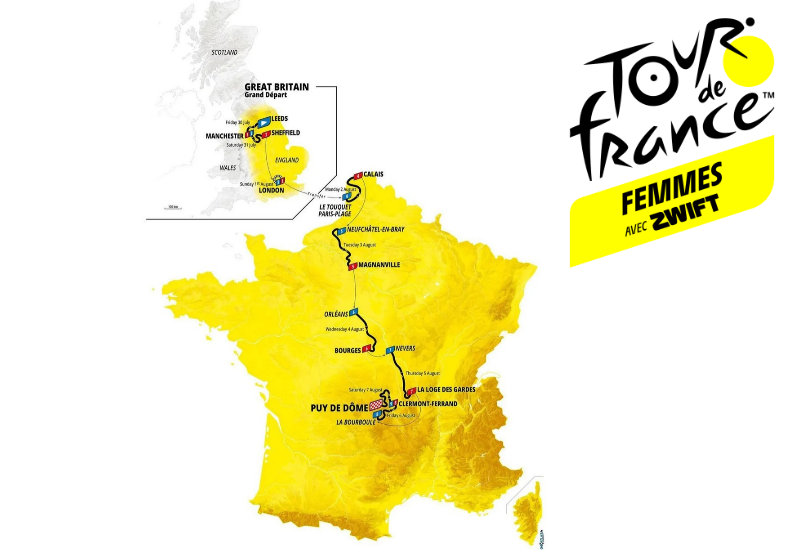
Nine stages, starting from the United Kingdom, a new team time trial and a double final act in the Massif Central: here's what to expect, even for fantasy cycling
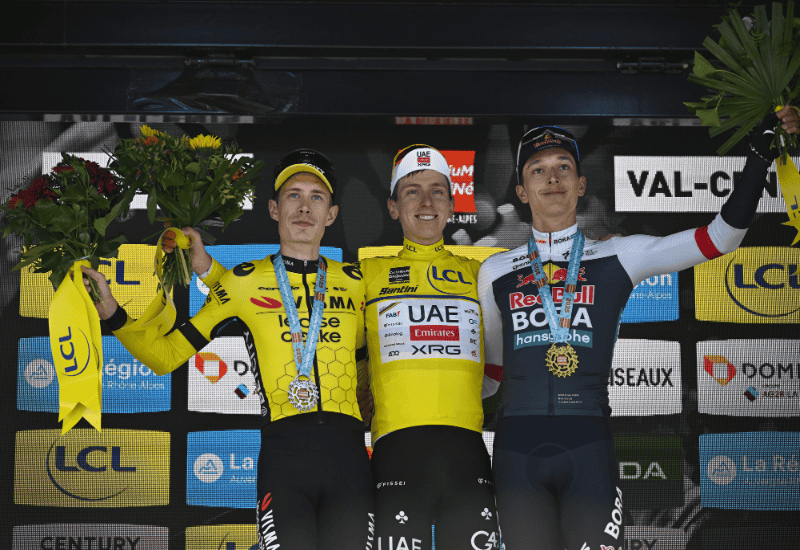
The stage racer wants to grow in one-day races as well, with the Haute-Savoie World Championships in his sights. Ralph Denk approves, but warns: "It's a delicate balance."