Can a sprinter, a Classics specialist, or even a general classification rider win the final stage of the Tour de France on Sunday? The inclusion of the Butte Montmartre in last year's twenty-first stage sparked heated debate: sprinters saw their traditional showcase on the Champs-Élysées disappear, while others hailed the radical twist to a previously ultra-predictable finish.
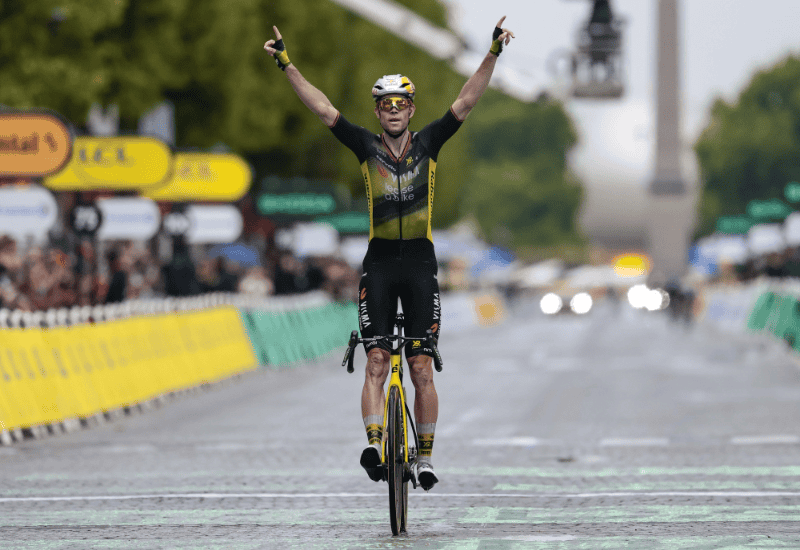
The historic introduction of the category 4 climb, just 1 kilometer but steep, cobbled, and technical, had rewarded Wout van Aert (Visma-Lease a Bike). The times were neutralized for the GC riders on the final climb of the Butte Montmartre, opening the paradoxical scenario whereby, had Tadej Pogačar (UAE Team Emirates-XRG) crashed, the Slovenian champion could still have been considered the overall winner. Depending on weather conditions, neutralizing the times remains an option for stage 21 in 2026.
In addition to the last-minute shortening to 88.7 km, due to safety concerns related to the fires that have hit the region, the route will be modified compared to 2025. An additional 4.2 kilometers have been added between the summit of Montmartre and the finish line for each of the three climbs in the final circuit. While the total distance of the final circuit of 16 kilometers is only 700 meters shorter than in 2025, the final straight to the finish line has been significantly lengthened: from 6.1 km to a full 10.3 km .
"I think that at least compared to last year, the sprinters still have a chance of going for the win if they have the legs," Tom Steels , winner on the Champs-Élysées in 1998 and now sports director of Soudal-QuickStep, told Cyclingnews . "It's a technical, narrow climb, but if you can maintain your position throughout and not lose too much time, maybe it's possible."
In terms of who might benefit from these changes, Steels believes that sprinters with the best climbing skills will have a good chance, but riders who double as Classics specialists could also have a say. "I think riders like Mads Pedersen (Lidl-Trek) will make it through, but it also depends a lot on the weather. If it rains, it will definitely be more difficult, but he will have a better chance. Maybe 40 or 50 riders will finish together."
Mathieu van der Poel (Alpecin-Premier Tech) is considered one of the clear favorites, thanks to his status as a specialist in one-day cobblestone races and his innate speed. "It's a bit like a Flemish Classic: you always have to maintain your position, because as soon as you're at the top, the descents are fast. You have to be in position; the riders start to drop away," Steels explains. "For GC riders, it's a terrible stage if the times aren't neutralized before Montmartre: you can lose everything in an instant."
Alexandr Vinokourov , team manager of XDS-Astana and winner of the final stage in Paris in 2005 with a long breakaway, also has a clear idea of his favorite for Sunday. "An extra four kilometers might change things, but if Mathieu van der Poel breaks away on the climb, it doesn't matter whether you add four or ten kilometers. The sprinters will need at least one domestique to catch him, otherwise no one will work to do so."