Races
Van der Poel: "Cycling is better without radios."
Van der Poel praises cycling without radios: "You have to ride instinctively."
R
Written by
Editorial Team
4 min read

Van der Poel praises cycling without radios: "You have to ride instinctively."

Mathieu van der Poel failed to regain the rainbow jersey, but he left the World Championships in Montreal knowing he had ridden exactly as he wanted.
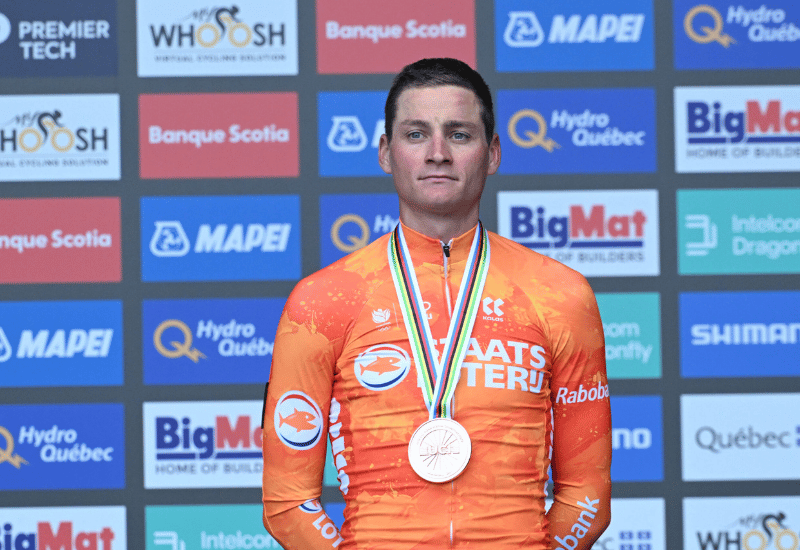
The Dutchman took the bronze medal behind the new world champion Brandon McNulty and Australian Michael Matthews, after a race where he attacked from a long distance.
"Obviously, I would have preferred to become world champion, but I ran the race I wanted to run," Van der Poel explained after the race. "I think I ran an incredibly strong race."
The former world champion was one of the men who ignited the race with about 90 kilometers to go. Instead of waiting for the finale, Van der Poel chose to anticipate his rivals' moves, constantly trying to get into the most dangerous situations.
"I was basically in front of all the attacks coming from behind," he said. "That's more or less what I had in mind. I don't think it took long for it to work, but unfortunately, it didn't."
The Dutchman's strategy was clear: don't wait for others to make the selection.
Van der Poel knew that tackling the decisive climbs alongside the strongest climbers could put him in trouble. For this reason, he tried to anticipate, exploiting one of his best qualities: the ability to read the race and move before his opponents.
"I felt good and just wanted to make the race tough," Van der Poel explained. "Above all, I wanted to be ahead when the big names moved up that climb, because I knew it would be difficult for me."
An aggressive tactic that could have turned into something much more important if the chasing group had hesitated a few more seconds.
"You never know. If they hesitate a bit behind and give us a few extra seconds, then it could really work," added the Dutchman. "They finally came back, and it wasn't long, actually. At that point, though, I had to take the risk."
The race then definitely exploded in the finale.
Van der Poel entered several dangerous combinations, but it was Brandon McNulty who found the right moment. The American attacked with about 33 kilometers to go and took advantage of the uncertainty among the pursuers to build the decisive lead.
Van der Poel tried to make another move in the final kilometers, but McNulty was now on his way to the rainbow jersey. Matthews then took silver in the chasers' sprint, leaving the Dutchman on the third step of the podium.
Beyond the result, Van der Poel wanted to highlight an element that he believes contributed significantly to the spectacle seen on the streets of Montreal: the absence of radios.
At the World Championships, riders lack the constant communication with team cars typical of WorldTour races. There's less information on gaps, fewer tactical guidance, and, above all, many more decisions are left directly to the riders.
A situation that Van der Poel particularly appreciates.
"This is the most beautiful thing there is, even without the radio," he explained. "I think this always results in truly beautiful races. I've said it many times: I'm a huge fan of this style of cycling."
A position that the Dutchman has long supported and which the World Cup in Canada has further strengthened.
Without precise information from the flagship, an attack can suddenly become much more dangerous. The pursuers must decide independently when to move, who should work, and how much margin to give.
And it is precisely this type of situation that seems to excite Van der Poel the most.
"You really have to run on instinct," concluded the Alpecin-Premier Tech champion. "And that's exactly what I enjoy doing most."
The Montreal World Championships didn't give him a second rainbow jersey, but it once again showed the cycling that Van der Poel prefers: attacks from afar, tactics that are difficult to control, and decisions made directly by the riders on the road.
Sports journalist and cycling enthusiast, following professional cycling for over 10 years. Collaborates with FantaCycling to bring you the best analysis and news from the world of cycling.
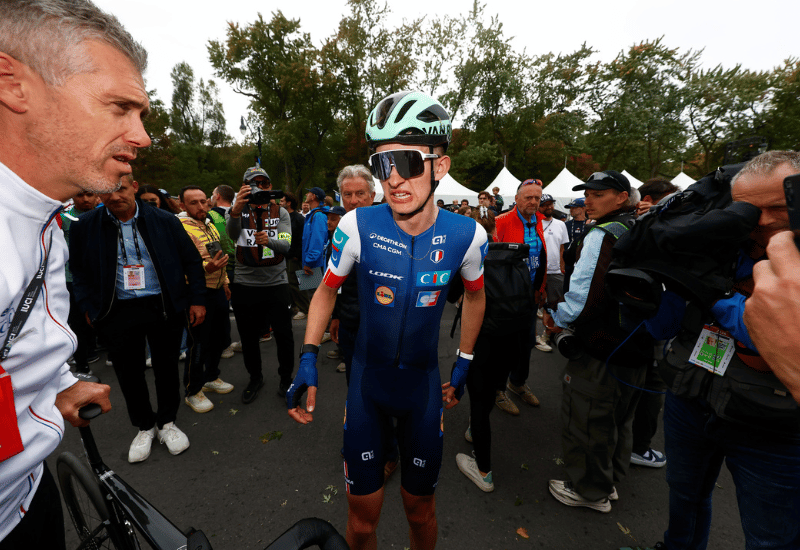
Paul Seixas takes full responsibility for his cramps and 15th-place finish at the Montreal World Championships: "It was a rookie mistake. My teammates deserved more."
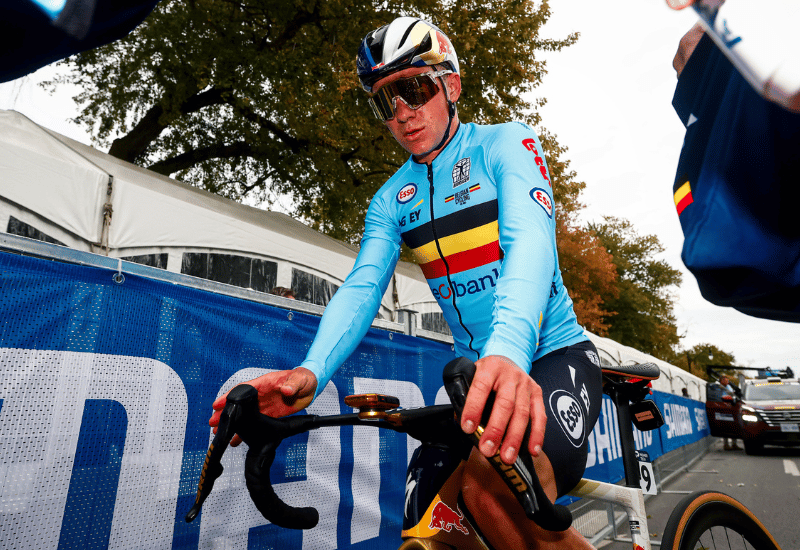
Remco Evenepoel recounts the difficult World Championships in Montreal: the pace set by France, the uphill difficulties, and his quote about Paul Seixas.
Van der Poel praises cycling without radios: "You have to ride instinctively."
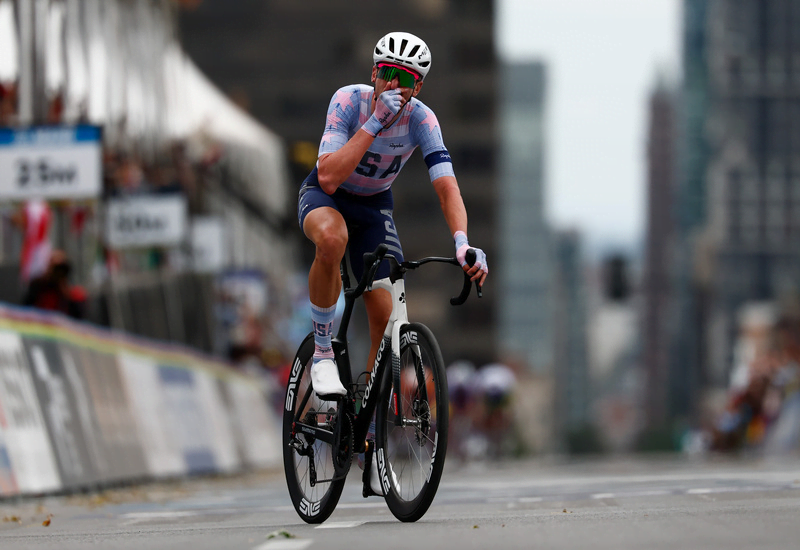
A solo attack with 30 km to go was decisive