Races
Earthquake at the 2026 Vuelta: landslides disrupt decisive stage
The Alto de Hazallanas route has been cancelled due to a landslide: the main stage is undergoing a makeover.

R
Written by
Editorial Team
3 min read

The Alto de Hazallanas route has been cancelled due to a landslide: the main stage is undergoing a makeover.

The toughest stage of the 2026 Vuelta a España , and likely the last real obstacle standing between Tadej Pogačar and his historic first victory in the Spanish stage race, has been radically altered by a series of landslides in southern Andalusia. This news has shaken cycling fans, who are being forced to rethink their strategies ahead of the race's climactic stage.
The Hors Categoria uphill finish on Collado del Alguacil – a new climb for the Vuelta – remains confirmed for stage 20, but everything leading up to the finish, through the foothills of the Sierra Nevada, has been completely revolutionised.
Organizers Unipublic announced on Friday that, due to landslides caused by the violent floods in February in the Granada area, the first-category climb of Alto de Hazallanas —which in the original route was to be tackled twice on the final Saturday of the race—is now impassable.
Instead of Hazallanas – the climb where Chris Horner laid the foundations for his historic overall victory in 2013, and already used in the 2022 and 2024 editions, the latter made memorable by Adam Yates ' solo breakaway – in 2026 stage 20 will tackle the nearby Category 1 Puerto de El Duque as the penultimate climb of the day before Collado del Alguacil.
Never before climbed in the history of the Vuelta, El Duque ascends the same deep, rocky Genil River valley that characterizes El Hazallanas. Its final two kilometers are identical to those of the more famous climb, with the same finish on the main road leading to the Sierra Nevada ski resort, at an altitude of 1,670 meters.
Despite the equally barren and rocky terrain, the Duque is slightly less demanding and shorter than the Hazallanas: an average gradient of 8.2% over about 4.8 kilometers, compared to the 9.8% gradient of its twin climb over 5.5 kilometers. The Duque also lacks the legendary 18-19% ramps that characterize the first kilometers of the Hazallanas, immediately after a technical descent from the nearby village of Güejar Sierra.
To compensate for this slight reduction in difficulty, the stage will now tackle the notoriously tough first-category climb of Alto de El Purche twice , before the grand finale on Puerto de El Duque and the decisive challenge on Collado del Alguacil. A not-to-be-missed detail for fantasy cycling fans: the double climb of El Purche could already select the red jersey group well before the finish, favoring the riders with more endurance on repeated climbs over pure climbers.
The stage's total mileage remains almost identical to the original route, decreasing from 187 to 186.8 km. The overall elevation gain also remains around 5,000 meters, compared to the 5,120 initially planned.
Whatever happens on the most challenging day of the Vuelta, 24 hours after the final stage of the 2026 route, scheduled for Sunday 13 September, a 99-kilometer route centered on the city of Granada, remains unchanged.
Sprint Cycling Photos
Sports journalist and cycling enthusiast, following professional cycling for over 10 years. Collaborates with FantaCycling to bring you the best analysis and news from the world of cycling.
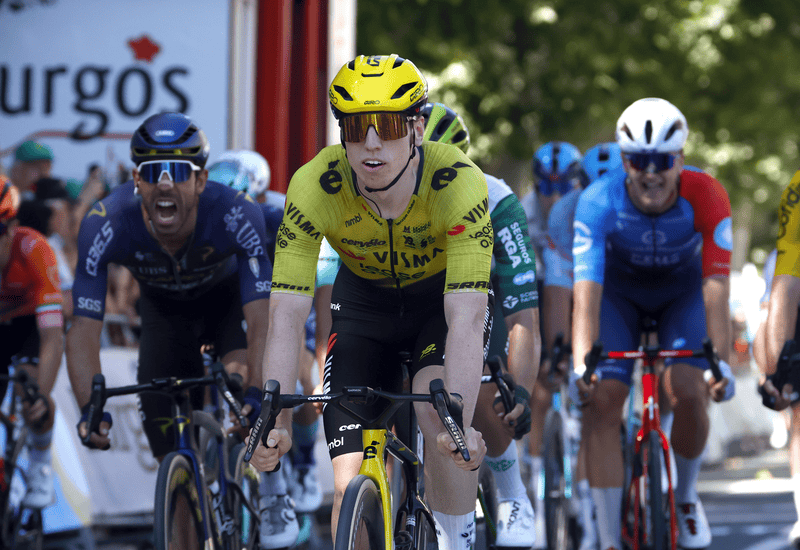
The young Briton outwits Laurence Pithie at the last minute in Briviesca.

Brenner comes back but fails to beat the Swiss
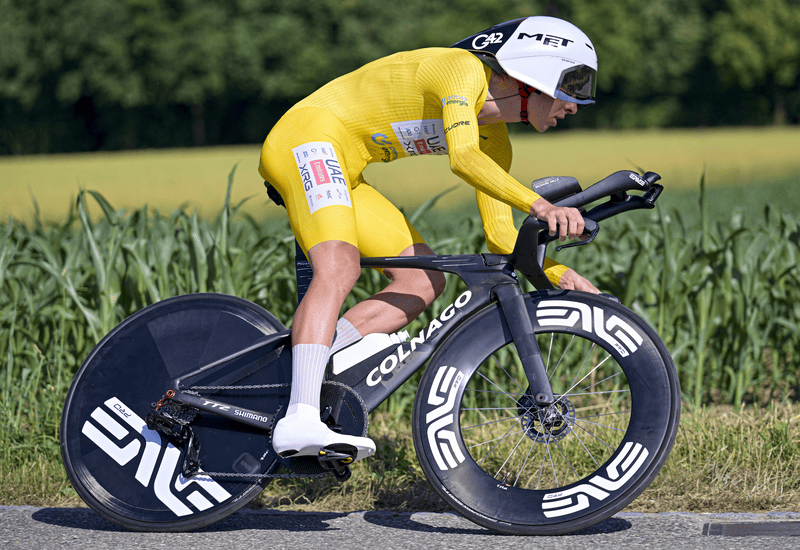
The Slovenian, after having equalled the record of five Tour de France victories, is already looking to the future
The Alto de Hazallanas route has been cancelled due to a landslide: the main stage is undergoing a makeover.